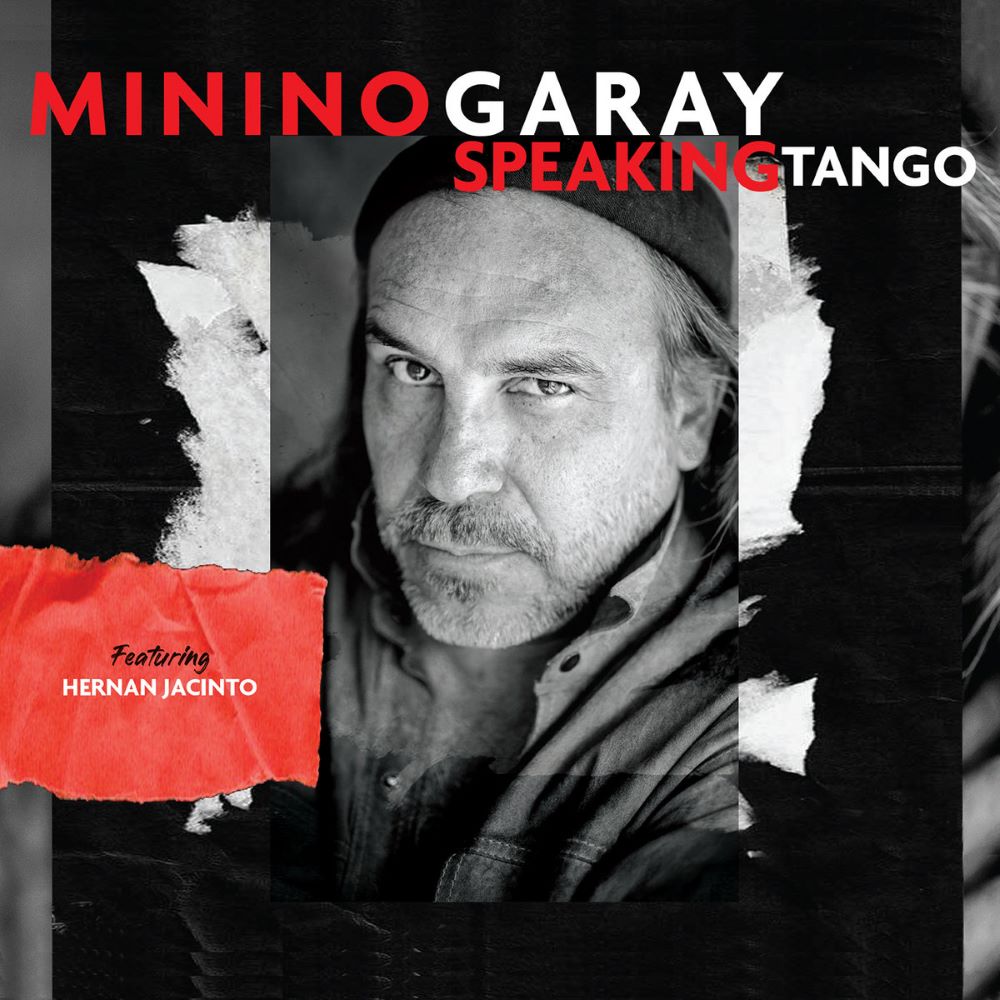
Life is Like a Milonga

Dancing tango at a milonga is like moving through life. You start out intrigued by the music with expectations of having a good time. You assess all available potential partners and choose; you hope they choose you back. Once an agreement is struck, you enter into an embrace, sway to the music, and begin to dance. You travel in a counter clockwise direction, with everyone else, trying to turn back time.

Some dance slower, some dance faster, some may stay pretty much in one spot, and others pass you by. Some follow the beat of the collective drum; some express the intricacies of the music exceptionally well; some dance eloquently to their own beat; some don’t have a clue.

You dance the same steps over and over again: the ones you were taught by others, the ones you remember, the ones you feel comfortable with. You may learn a new step every now and then, maybe even think you’ve made up something unique. Occasionally you incorporate those new steps into your dance. But, chances are good that you will forget most of what you’ve learned and continue to dance the same old steps you have always danced. You will continue ‘round and ‘round the floor in an endless loop.

You take a break. You have a drink. You chat with friends. You have another drink. You try to catch someone else’s eye and if you succeed, you get up and give it another go.

You may experience a sublime moment – one you want to capture, contain, and keep recreating.  But, the tanda ends, the partner parts, and you return to your table. You want that moment back. You have another drink.

There are many factors involved in ensuring a rewarding experience. You have control over those factors – you have choice. However, whether you go with the flow, stay in one spot, or take a risk by moving against the line of dance, one fact remains: you never really get anywhere. Still, you’re expected to enjoy it.

Although you always end up back at your own table, you can change partners, you can change venues, you can opt to move only to music that inspires you, you can buy 100 pairs of fancy tango shoes, and you can even choose to sit out for a while. But, eventually, the music stops and the milonga is over. Eventually, there’s nothing left to do but go home.

Magic Words

Your partner needs to be taught how best to love you. He/She didn’t come into the relationship automatically knowing how to do that; it’s your responsibility to teach him/her.

You will not always get what you want. It is inevitable that you will be disappointed. You will feel hurt and you will get angry. By getting what you don’t want that you will become clearer about what you do want and then you can focus on that. Don’t focus on what’s not going well – you’ll just get more of that. The key is to move on – not keeping score along the way, building a case, nor seething with resentment – but remaining unattached to the behavior of the other.

Forgiveness is ‘the renunciation or cessation of resentment, indignation, or anger as a result of a perceived offense, disagreement, or mistake, or ceasing to demand punishment or restitution’ (WIKI) Get over it and get on with what’s important.

Offenses may be small – a forgotten anniversary, or betrayals may be temporarily decimating – like adultery and murder. I know of both women and men who have stood by waiting for their adulterous spouses to realize the ‘error of their ways’ and return home. I know a woman who has forgiven the man who killed her father and has made ‘poetic justice’ her life’s work. We all make mistakes; everything is forgivable. How big are you willing to be?

It’s not imperative that you forget, in fact, keep the infraction in the back of your mind as a lesson you’ve learned – don’t keep it foremost in your mind and don’t dredge it up as ammunition in a future battle. Forgive for your sake – not so much for the sake of the other. It’s not always necessary to  tell them that you forgive them. It will be obvious in your behavior. Sometimes, forgiving someone implies that they have done something ‘wrong’ and although you may have been hurt, they likely didn’t believe that they were doing anything ‘wrong’. Their intent was not likely to harm you but just to get their needs met. Often our desires conflict. Everything is a matter of perception and can be justified. Don’t forgive in order to feel superior but just because that’s what love does.

Your soulmate was sent to expand and enlighten you. Growing each other up comes with growing pains. Love understands that we do things that hurt each other even when that is not our intention. We are in relationship to smooth the rough edges off of each other. In order to do that we need to be a little abrasive and then polish with a fine cloth.

Don’t allow the behavior of another to effect yours, don’t give your power away to your distress of not getting what you want. Stay strong in your commitment to taking the high road, let it wash over you and stand in the power of your absolute love for them.

There are two magic words that facilitate forgiveness: I’m sorry. It’s that simple. Be big enough to use them when appropriate. No need to accept responsibility – if you can’t bring yourself to do so – or if you’re not ‘responsible’. No need to explain or defend. Just an authentic, compassionate apology works wonders to diffuse a situation that is otherwise susceptible to escalation.

Okay, I know that’s a lot to expect. It takes practice and patience and a lot of mistake-making. We all have our limits and we all have our limits stretched. We’re here to discover what matters and we will only discover that if we are tested to the core. When we find that there is very little that actually matters it’s much easier to forgive the small betrayals. When we let something go we make space for something new and more workable to take its place.


Gender Reciprocity: You Scratch My Back, I’ll Make Dinner

The following is a dialogue between Maraya Loza Koxahn and David Shakleton – editor of Everyman Magazine.

Maraya: As a leader in the men’s movement, David, you’ve been an advocate for gender equality for several years. To me, the word ‘equality’ implies ‘same’. Men and women are not the same and never will be. I don’t want ‘equality’, I want justice in the courts, fairness in the workplace and harmony in the home – taking into consideration our similarities and our differences. I think it would mean putting an end to the competition and maintaining a dance of respect and curiosity.

David: The social equality I want between men and women is not ‘identically equal’. It is only ‘the same’ in a few basic areas like inherent moral status, and access to basic rights, freedoms and opportunities. In other areas, I agree with you that gender differences are significant and influence outcomes greatly. So, equality becomes, as you suggest, a dance of respect for difference.

Underneath the complex trade-offs of what we want – equality and respect for our differences – lies a whole other complexity of less conscious gender role expectations that come from our cultural and social conditioning and our deep biological imprint (i.e. boys don’t cry, women are more nurturing, etc.).

Maraya: Operating from that complexity with complete consciousness is challenging. The other night my boyfriend and I were going to see a play. As we approached the theatre I said that I would pay my own way. Teasingly he asked, “does that mean I don’t get sex tonight?” Keeping with the spirit of fun I replied, “of course not honey, in fact it is I who should probably be paying you for sex.” He was chuffed.

We can laugh, but for many people the traditional dating ritual still has the undercurrent of these expectations. The assumption is that men want sex (which implies that women don’t) and that they have to pay the way to get it. Conversely, women want to be taken care of, treated special and eventually have to ‘put out’ in return. That’s an outdated notion.

First of all, I believe any healthy woman wants sexual pleasure/physical intimacy as much as a man does. Secondly, most women where we live are capable and desirous of looking after themselves financially. My vision is that we strike a balance where sex is a mutually desired and satisfying experience in itself and dates are traded for dates, each according to their ability/means. There should be a clear understanding and agreement about what the exchange is and no one should feel compelled to keep score.

David: I share the same vision. Consciousness and agreed upon transactions are the way to healthy, fulfilled relationships. It’s difficult though because the old codependent patterns are often imprinted into our unconscious. So, for instance, I, as your date, might not feel entitled to sex unless I’ve paid for dinner. I might think it was unfair that I had to pay but part of me would still think that if you had sex with me without my paying then you must be ‘cheap’. My resentment might show up in how I started treating you. Those kinds of usually unacknowledged and unarticulated thoughts run our lives from beneath our conscious awareness and make relationships confusing.

At present, relationships between men and women are in a strange situation, because the success of the women’s movement means that almost everybody is aware of the ways that men have power over women (i.e. financially, physical and sexual violence), but the relative social invisibility of the men’s movement means that almost no one understands the complementary ways that women have power over men (i.e. shaming, emotional abandonment, manipulative use of beauty or sexual power). We have concluded, as a society, that women don’t have much real power, so their form of power tends to be overlooked and considered less valid than the way men express power over women.

Maraya: I think that men do know, on some level, the power that women have and they’re terrified of it. They don’t want to meet it and don’t feel capable of defending themselves in the face of it. I find that men prefer to avoid it, dismiss it, acquiesce, or leave if it becomes too scary. I also think that women know their own power and are often not admitting it because that would require that we take responsibility for all of it – including the ways we use it to manipulate.

If we’re going to continue this as a gender competition and not engage in honest interaction then why would I want to give up my advantage? I know the power of my beauty and sexuality – throw in intelligence and a sense of humor and I’ve practically got the ‘cat in the bag’ – or the guy in the sack – and that’s usually where I want him. Give him sex and emotional nurturing and he’s mine. As benevolent as I think I am, there is part of me that just doesn’t want to give up control without a good reason. I know surrender is an imperative aspect of this change we desire, and requires radical trust, but I’m reluctant to surrender until I sense that there is enough radical honesty to engender my trust. I want someone to catch me when I jump.

David: We do need to work together to change what’s not working. For a man during the earlier years of the women’s movement, the challenge was getting us to realize that it was right to stop chivalrously protecting women from social power and responsibility and to see that women were fully capable of engaging as equals in the workplace. Once men understood that women truly wanted social equality, and saw the benefits, most became willing to make space for them in the corporate world.

If women can really understand that men want domestic equality – to share fully in child raising and feel they are fully capable – change might happen faster. One challenge is to stop care-taking each other. Women have to let men have their emotions, for instance, rather than feeling they have to comfort or protect them. It’s a similar condescension to what men showed when they chivalrously tried to protect women from dirty and dangerous job-sites.

Maraya: I don’t agree that, overall, men were willing to make space for women in the corporations and the educational, political and religious institutions without a fight. I do, however, believe that men want to be fully engaged in the raising of their children and have an equal say regarding their homes.

I believe that men and women care deeply for, and want to take care of, each other. When the ‘taking care of’ becomes ‘care-taking’ – a form of protection or patronizing – it diminishes the other and can lead to a cycle of codependency. If we can stay conscious about our patterns and challenge each other on our shadow aspects, maybe we can heal the need to ‘manage’ each other.

David: The key to becoming conscious is to recognize the reality of our unconscious. I discovered mine about eighteen years ago. I was dating a woman and I really wanted something from her. I told her, “unless you do this, I’ll leave you. It’s that important to me.” (Yes, I really was that manipulative.) Courageously, she called my bluff and said, “well, if you need to – go – but I’m not giving in.” In that moment – and not until that moment – I realized that I didn’t actually want to leave her. I didn’t know that when I said it. I thought I was sincere. The discovery that I could lie to myself astonished me. I realized that there were two ‘Davids’: one I was familiar with and had thought was complete, and another, that operated from outside of my awareness but still influenced me. Our unconscious self influences us mainly through our feelings about what is right and wrong, and our notions about gender behavior are some of the most deeply planted.

Maraya: It’s scary, and kind of exciting, to think we know ourselves and then find out there is still so much more waiting to be discovered. The process of ‘peeling that onion’ often brings tears to my eyes.

David: Yes, it can be difficult and emotional, but if we can do that work in relationship where both partners are conscious, where both the man and the woman are working to discover and dissolve their codependent gender patterns, it can be a wonderfully exciting and fulfilling process. I think one of the benefits of men and women being different is that we can challenge each other to grow out of the narrowness of our single-gender worldview. It is only ‘together’ that we have the whole story. Men and women have different energies and there is vital wisdom in the merging of those energies into an integrated whole. I’m convinced that we can learn to hold the tension of our differences without negative judgment, seek creative resolution and lead truly magnificent lives.

This dialogue was originally published in Synchronicity Magazine in August, 2005.

Lovers Leap

Lovers Leap
September 11, 2001

I didn’t actually see it for myself
But I heard about it later
From someone who had been there
Someone who had seen them fall
It’s an image that won’t leave me.

She wasn’t the kind of woman
That he would have ever taken notice of
But in the moment of his indescribable fear
She touched his hand
“Come,” she said, “we must go now.”

 Embraced by her calm
He looked into her eyes
And saw them deeper
Than the building was tall
In them he saw the compassion
And the wisdom
Of a thousand lifetimes
And in them he saw the promises
He had longed for.

Behind her
He witnessed an inferno
That even Dante could not have imagined
And as he looked again into her eyes
He saw reflected
The clear blue heavens.

He took her hand and turned
To where there was no longer a window
Together they leapt.

As they descended toward heaven
I’m told
You could hear the resonance
Of their two hearts
Like the song of angels.

And just before the silence
She squeezed his hand
Looked up at him
And whispered through the wind
“we begin”.

by Maraya Loza Koxahn
from Metamorphosis of a Narcissist
2005
Twisted Willow Press

The Dance of the Seven Deadly Veils

After seven years the final veil is lifted. Each has revealed a sin to be grappled with until there is nothing left but nakedness. They are tired – and itchy. He picks her up from the base of her pedestal, rubbing the fog from his eyes until he really sees her. Surprised, he says, “you’ve changed!” After many years of disappointment, she turns to look at him and sadly replies, “you haven’t.”

Speaking Tango

Across a smoky, dimly lit room, the eyes of two strangers meet. She holds his gaze as he nods and she nods in return. Rising from his chair he crosses the floor to her table and extends his hand. Accepting it, she accompanies him to the dance floor. It is her first time to Buenos Aires and she speaks little Spanish. He speaks no English. No matter, they both speak Tango.

Entering into an embrace, they sway slightly to the music – sensing it, sensing each other and then, two individuals seduced by the music, become captives of the dance as they navigate in unison across a crowded floor in what is called ‘the vertical expression of a horizontal desire’.

The rules and the etiquette of the dance are understood. The man, fully in his masculine, leads. The woman, the epitome of the feminine, follows. A masterful lead is sensitive, skillful and confident. The woman is expected to gracefully surrender.

Whether strangers from different Americas, two genders from different planets, or family living in the same house, we have all experienced the difficulty of effective communication. Daily, we are prone to using too many words, or maybe not enough – speaking superficially, unconsciously, and when it comes to expressing our deepest thoughts, desires, feelings and beliefs, we stumble around . . . grasping for ways to be understood. We try to protect ourselves and the the other, sometimes we, unfortunately, try to manipulate and hurt the other. We try to remember what we learned from the last great book we read on communication. We strive to inform and entertain. We try to create something meaningful. This is always a challenge.

If we are not authentic, if all parts of ourselves are not in alignment, we are likely to be sending mixed messages and people will be confused by us. At some level we feel contradictions and it results in us not fully trusting each other. We are prone to making too many assumptions, forgetting to maintain a respectful curiosity, resorting to familiar, less mature ways of communicating during times of stress – thereby, no longer engaging in loving communion

When we dance we can forget everything else and focus on surrendering to the music and our partner. Conversation becomes unimportant and habitual worries leave the room. When a woman is swept off her feet by a skillful dancer her whole self melts into the experience of him. The result is worth his effort. With the body of a woman pressed against him, surrendering in his arms to his every move, he is in charge and she becomes attentive – an active listener. Surrender, for a woman who is used to multi-tasking and leading an independent life, is often difficult and less than what she is willing to do. To be led with skill into a state of ecstasy, to be ravished and filled with love is the wish of the feminine.

We long for something significant. We long for silence. We long for connection. So we dance.

Falling Off The Relationship

It promised to be an idyllic evening on the calm surface of the sea when seemingly without warning a stiff breeze upset my balance and toppled me from the ship. Disoriented by the sudden upheaval, and unable to effectively cry for help, it was only intuitively that I was able to attempt to tread water.

I remember having read to you earlier from the rescue manual but you must have forgotten the protocol and relied on doing all that you inherently knew to do. You tossed me an insufficient line.

I could feel myself succumbing to the pull of the undercurrent. Weary of trying to stay afloat and trembling from my state of shock, exacerbated by ensuing hypothermia, I let the water take me. I sunk into the murky depths, no longer able to see clearly, hearing only muffled sounds.

The frigid bitch was quick to steal the blood from my extremities and the oxygen enabling my brain. I tried to hold onto my last breath but the pressure forced it from me. Collapsing lungs crashed like a tidal wave and shattered my heart.

You must have seen the bubbles rise to the surface and extended your hand as if in attempt to save me – as if I could see, or even had any desire left in me, to grasp it. You jumped in far enough to get your feet wet and must have thought that I would recognize, and be satisfied by, your noble intentions. I thought I heard you say that you were going to do “whatever it takes” … and that you were afraid to go “too far” … “Too far” was as far as you needed to go. A drowning woman is not saved by an invitation to accept an outstretched hand.

With nowhere to go I tried to leave. I thrashed about aimlessly in my subterranean nightmare. You called me back. With nowhere to go I went with you. I was able to purge just enough water to allow in some air. I made other tentative attempts to save myself. Something deep and primal in my last moments cried out for you in the form of a whimper. I invited you to crawl up inside me and shake me loose from myself. We fused to each other in a ferocious physical struggle to feel something. I thought my blood might revisit my fingers and toes, assuage my heart back into submission, and send with it oxygen sufficient to elicit a rational thought. I felt I might be returning.

Too soon and as suddenly as they began, the thrusts and undulations stopped. You lay still. I wanted to believe that you were only resting, taking a moment to sense me, that you were coming back to get me. It was in the crushing weight of that moment, your limp, outstretched body on top of mine, that it became clear. It was over. It was then that the cumulative weight of all my life’s disappointments became heavier than any kind of love you would ever have me believe you had for me. I had disappeared.

I had nowhere to go. I no longer existed in three dimensions. I rolled over as far a I could without actually falling over the edge. My one last hope was to sleep. Sleep:delicious, oblivious safety of dark stillness. Maybe God would grant this a dream. Perhaps I would awaken in the morning without memory. Perhaps the darkness of the night would be absorbed by the light. But no. I was to awaken instead from the impermanence of this sweet death to shadows cast by morning sun on what had been, and not been, done. It was a mistake. A test I had failed. A battle that I had fought with God and lost. I had been asked to save myself in us and had proven myself unworthy of even my own admiration.

You approached me at the edge, wrapped yourself around me and we both hung precariously. Too late. I was already gone. I could no longer breathe. I tried to push you away calling out in whispers for space but you could barely comply. You clung to me desperate to feel some connection while I slipped away. You wouldn’t go, wouldn’t let go, yet couldn’t get close enough to save me.

Finally, faced with your own futility you released me and rose from the already empty bed. There was nowhere lift for me to go – but home. And, you let me … you let me go … let me go …                        10/2006